## A Dozen Methods for Removing Damaged Hardware
## **Introduction**
This article is an update to a previous Pinball News [Pinball Tools article](https://www.pinballnews.com/learn/toolkit/index.html), and is presented to you in four parts: *[General Hand Tools](https://www.pinballnews.com/site/2023/09/18/pinball-tools-general-hand-tools/)*, *[Electrical and Electronics Tools](https://www.pinballnews.com/site/2023/09/18/pinball-tools-general-hand-tools/)*, *Soldering Tools*, and Damaged Hardware Removal with this, *Damaged Hardware Removal*, being the final part of the series.
From my depth of experience, hardware – such as bolts, screws and nuts – usually gets damaged for one of two reasons.
First, someone used a power tool when a hand tool should have been used. Second, the incorrect bit or tip was used. Sometimes those reasons foolishly get combined.
With this in mind, it is strongly recommended you carefully select your method and associated tool(s) required to remove hardware and, whenever possible for the act of removal, that those tools be hand powered tools. It is also strongly recommended that once removed, you replace the damaged hardware with the correct new piece.
This list is arranged from those methods which are easiest to the ones requiring the most skill and work. Of all the twelve methods listed, I have had the best luck with numbers one, two, three, and eight.
## 1. Rubber Band
This ‘hack’ actually works! Simply squeeze a rubber band (AKA elastic band or gum band) between the damaged fastener and tip of the appropriate hand tool.
This method has a few advantages:
* First, it is cheap.
* Second it is relatively easy to perform.
* Third, it can be accomplished without the use of additional special purpose tools.
* Fourth, it can be used on both the inside and outside of the hardware’s head.
* Lastly, it is surprisingly effective.
Sometimes though with this method you may find the hardware is too damaged or stuck for it to work. Also, what ever material the band is made of, is sacrificial. The inherent softness of the band’s material gives this method added grip but limited toughness.
**Pro Tip:** If you can’t find a rubber band, try wrapping thread around the distressed nut or bolt. The same works around the tip of the hand tool to be inserted.
## 2. Liquid Screw Grip
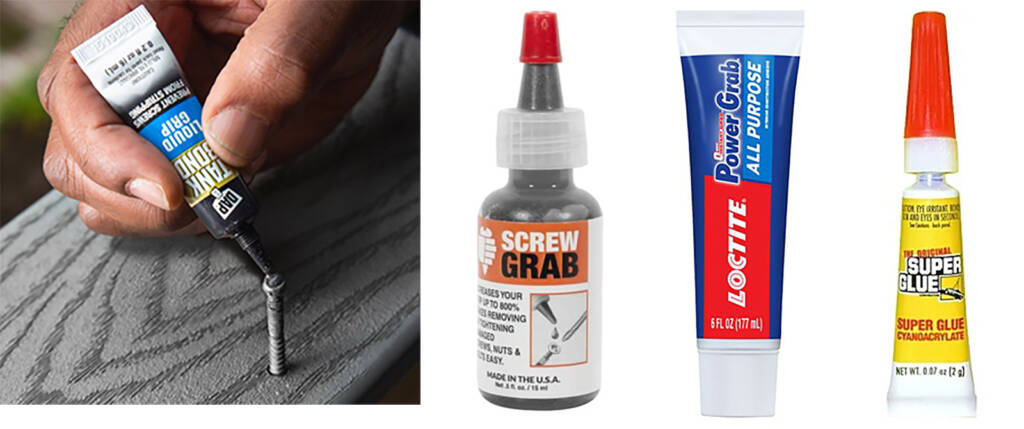
This method is slightly different from first. Instead of using a soft band, this method employs some sort of hard grit suspended in viscous liquid. The product goes by various names, including ‘screw grip’ and ‘friction drops’.
One manufacturer advertises, “Increase torque by up to 800%”. The only friction drops product I have used is from the brand ‘Bondhus’ but several different brands are available. Just a few are shown below. Using this sort of ‘screw grip’ has been even more successful for me than the first method.
**Pro Tip:** In a pinch, the ubiquitous ‘super glue’ can sometimes work.
[](https://www.pinballnews.com/site/wp-content/uploads/learn/pinball-tools/001-pinball-tools-removing-damaged-hardware.jpg)
Three different friction drops and super glue
## 3. Re-form the Grip Surface
Use a hammer and the tip of the appropriate tool to re-form the recess or head of the hardware you need to remove.
Then, without removing the tool, remove the hardware. This method also works on both the inside and outside of the hardware head.
## 4. Locking Pliers
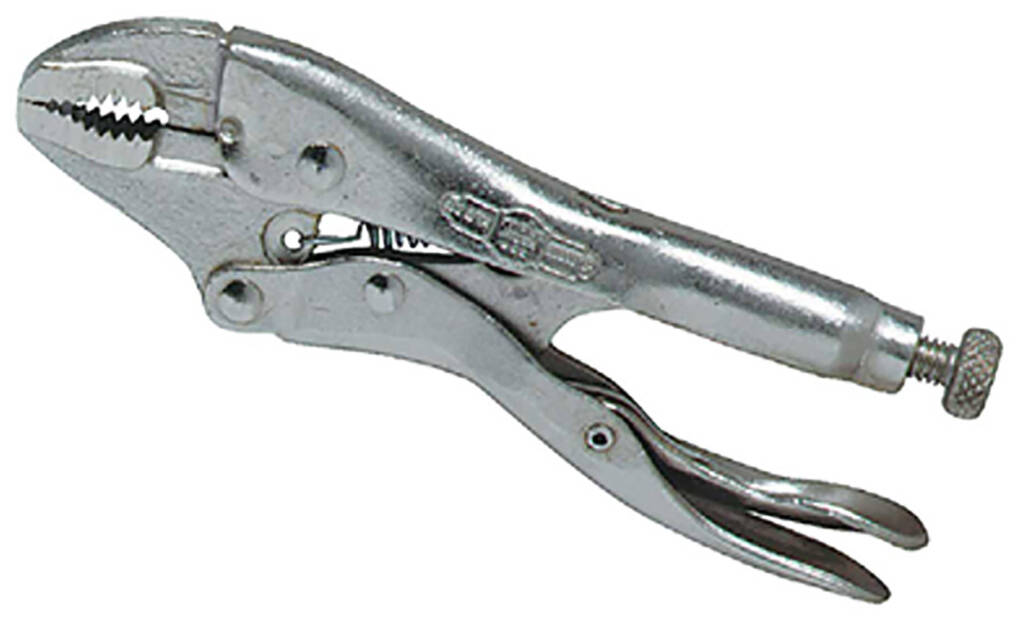
Standard locking pliers can greatly aid in the removal of damaged hardware. Once locked on, the pliers do all of the holding, so you can concentrate on the removal.
This method can only be successful when there is enough of the damaged hardware to lock on to. However, this method has the advantage of being useful in removing hardware which is missing its head.
[](https://www.pinballnews.com/site/wp-content/uploads/learn/pinball-tools/002-pinball-tools-removing-damaged-hardware.jpg)
Locking pliers
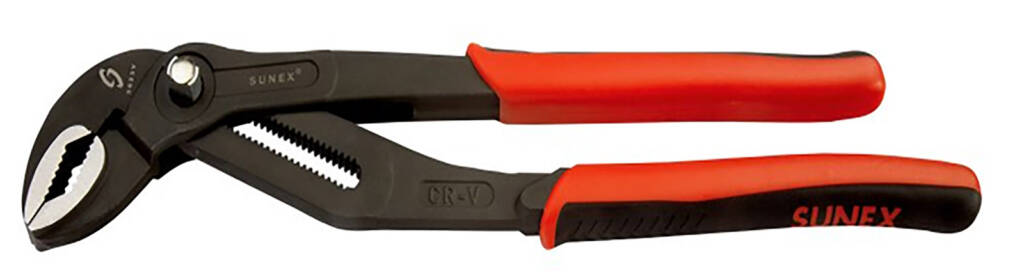
**Pro Tip:** ‘Water pump’ style pliers are self-locking and may be useful in the removal of damaged hardware.
[](https://www.pinballnews.com/site/wp-content/uploads/learn/pinball-tools/003-pinball-tools-removing-damaged-hardware.jpg)
One of many water pump pliers
## 5. Screw Removal Pliers
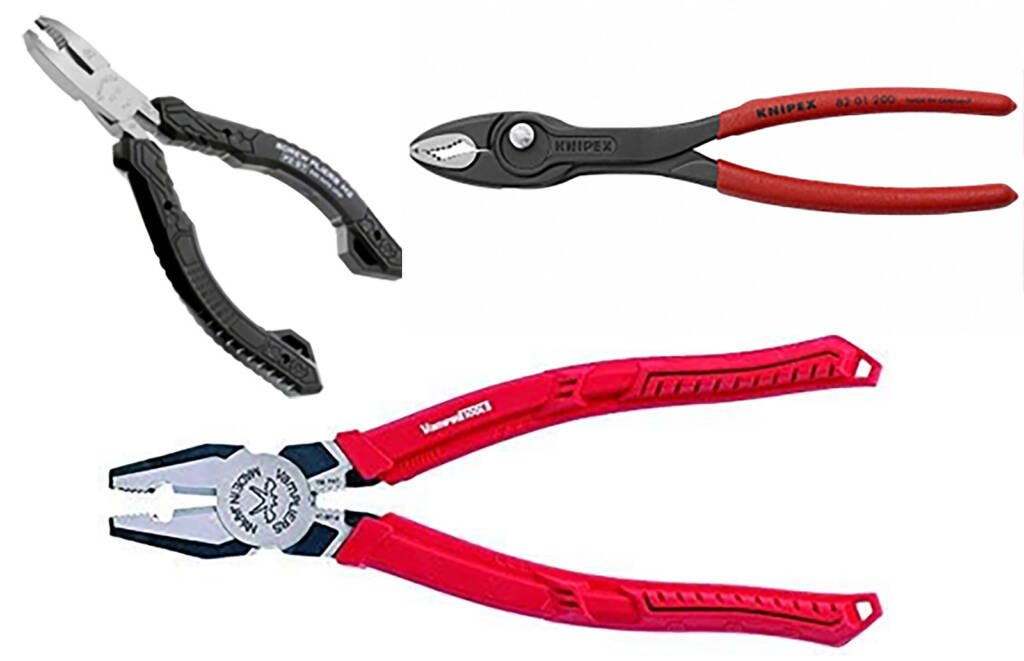
This type of pliers has grip face geometry and features, which greatly aid in the removal of damaged hardware.
Several manufactures offer such pliers: [Engineer](https://www.engineertools-jp.com/screwremoval), [Knipex](https://www.knipex.com/products/pipe-wrenches-and-water-pump-pliers/knipex-twingrip-slip-joint-pliers), [Vampire](https://www.vampiretools.com/) (as shown in the order of pictures below) are just a few. Several styles of these pliers are available.
[](https://www.pinballnews.com/site/wp-content/uploads/learn/pinball-tools/004-pinball-tools-removing-damaged-hardware.jpg)
A few dedicated screw removal pliers
## 6. Side Cutters
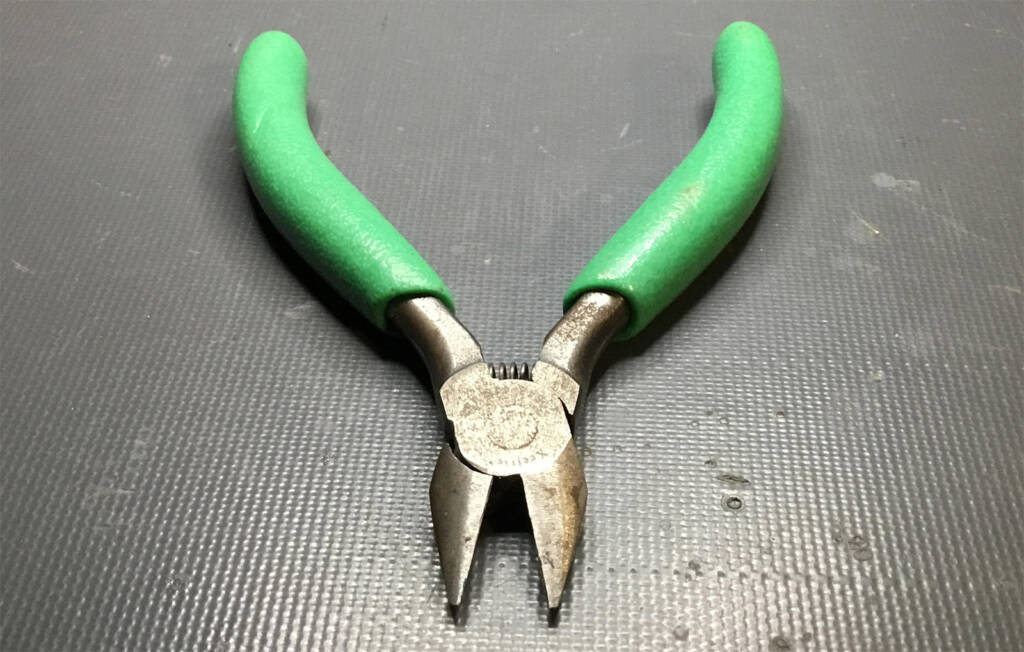
When a pair of side cutters loses its keen jaws for cutting, it can be pressed into service as a still sharp gripper.
With this method, the cutters ‘bite’ into the screw head or body and provide grip for hardware removal.
**Pro Tip:** When removing hardware and you find its screw hole stripped, the very tips of this type of cutter can be gently employed in the valleys of hardware’s threads. When unscrewed, the hardware will simply climb out of the cutter’s loose grip.
[](https://www.pinballnews.com/site/wp-content/uploads/learn/pinball-tools/012-pinball-tools-removing-damaged-hardware.jpg)
Old semi-flush cutters now used for hardware removal
## 7. Left-Handed Drill Bit
These are like normal twist drills for metal, but they are spun counterclockwise. This is opposite of normal drills bits.
The tip of that bit can sometimes ‘dig’ into the head of the messed-up hardware and bring it up and out of its threaded hole.
## 8. Hammer and Chisel
With this method, a chisel is used as a drift to help spin hardware.
The small ‘cold chisel’ bites into the damaged hardware while the controlled strikes of the hammer move that hardware in its direction of removal.
Though this method takes more skill than the previous ones listed, it has proven itself to be quite successful.
## 9. Fabricate a Slot
With this method, a hand file or small electric rotary tool is first used to cut a fresh slot in the damaged hardware. Next, a slotted screwdriver or bit is used for removal.
One benefit of this method is that it can be used in conjunction with any of the previously listed methods. In addition, it still allows a chance for more aggressive methods.
## 10. Screw Extractor
This method requires the most effort and also the greatest amount of skill, while still being able to remove a mostly intact piece of hardware.
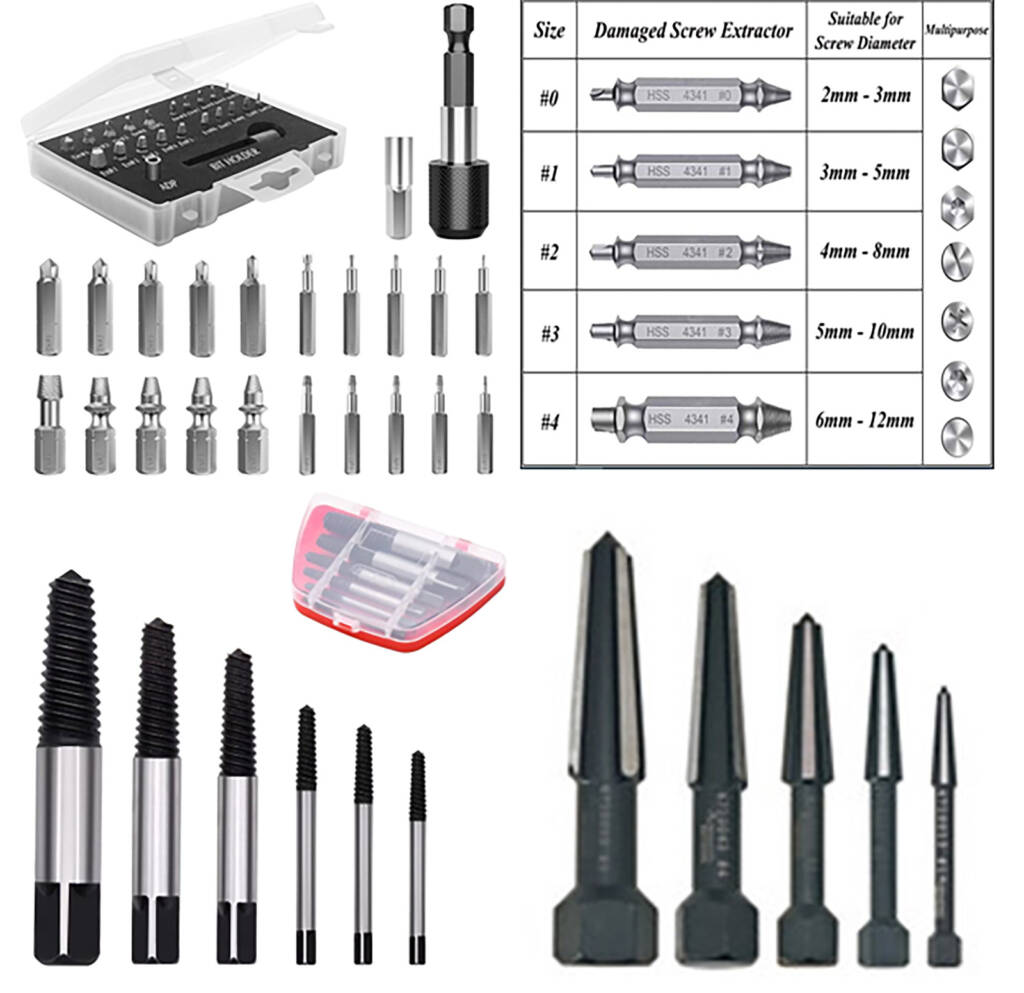
These specialty extractors are usually sold in kits. Most require predrilling a pilot hole with a special bit. That hole gets used by the actual remover.
Some of the kits do not offer drill bits. In this case a normal twist drill intended for use in metal can be used, but if possible I recommend a left handed drill bit ([See #7](#left-handed-drill-bits)). The extractor is then usually hammered into the hole, left in place and used to remove the now appended hardware.
Several extractor makes and types are available. I have been forced to use this method with severely damaged hardware but have only been about 50% successful.
[](https://www.pinballnews.com/site/wp-content/uploads/learn/pinball-tools/006-pinball-tools-removing-damaged-hardware.jpg)
Just a few of the many screw extractors available
## 11. Drill Out the Hardware
It takes a fair bit of skill to squarely drill out the exact center of the bad hardware. To save the existing threads, the old hole must be retapped at the exact start of the helix.
I have always delegated this task to the shop. With use of specialized skills and machines, an experienced machinist can almost always save the day!
## 12. Get a New Assembly
Sometimes the bad hardware just can’t be removed; possibly from previous failed removal attempts or because the assembly itself is too fragile.
In this case, it may just be time to buy a new assembly and replace the entire thing. In this last resort case, the damaged hardware is simply replaced with the entire new assembly.
## Lucky 13.
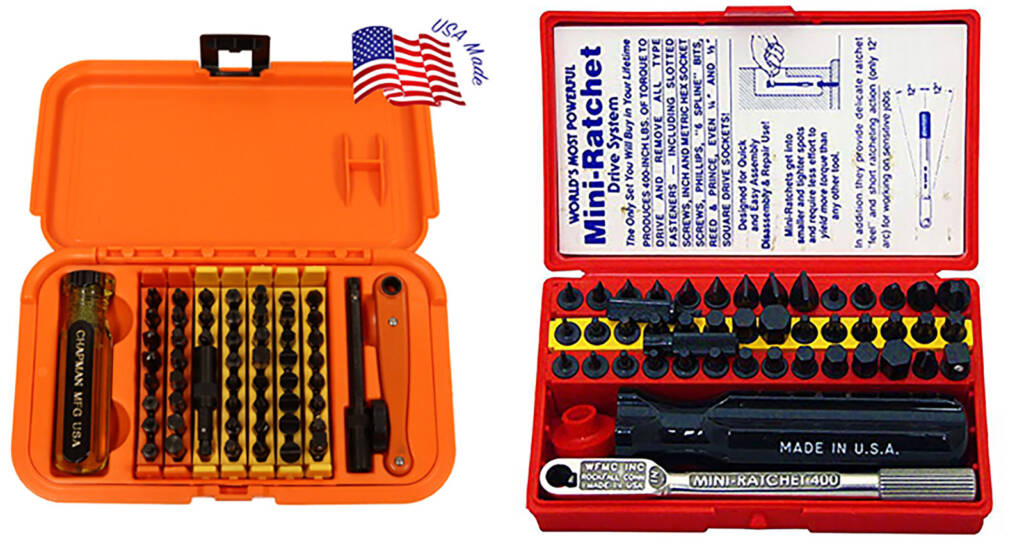
As a bonus I’d like to let you into a secret; [Chapman](https://chapmanmfg.com/) and [Mike Wadswoth](https://wfmc.shop/) bit sets. The high quality of these bits make them great for damaged hardware removal.
For example, their slotted bits are not the chisel type. They are precision hollow ground, affording greater fitment. The tools from both companies are configurable.
[](https://www.pinballnews.com/site/wp-content/uploads/learn/pinball-tools/008-pinball-tools-removing-damaged-hardware.jpg)
Chapman and Mike Wadswoth bit sets
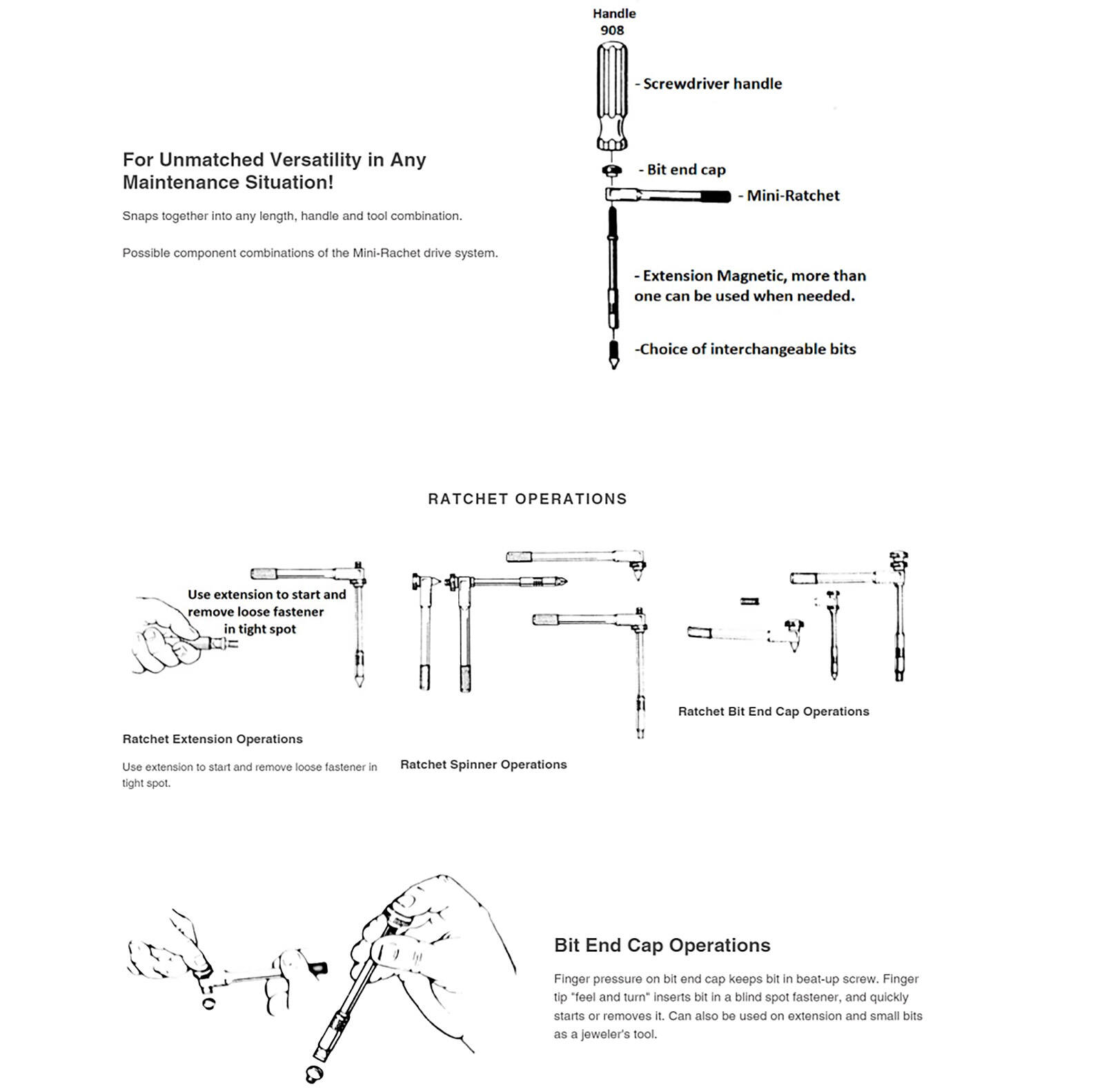
Here’s part of the data sheet describing the Mike Wadswoth Ratchet Set’s configurations. Click it to view the full sheet.
[](https://www.pinballnews.com/site/wp-content/uploads/learn/pinball-tools/007-pinball-tools-removing-damaged-hardware-data-sheet.pdf)
Part of the Mike Wadswoth Ratchet-Set’s Datasheet
These sets can be used is such a way that the ‘spinner handle’ is placed directly over the bit nestled in the damaged hardware. The second handle is used as a ‘helper’. The spinner is used to apply force into the snafued fastener. The helper is used to unscrew the entire set up.
One disadvantage of this set up is that it only works on the inside of the head of the offending hardware.
One advantage is that it can be used in conjunction with a few of the previous methods.
The expensive and limited drive system kits can be somewhat duplicated by using the combination of a spinner handle, an adapter, a ¼-inch hex, and a good quality tip.
A ¼-inch wrench is used on the adapter as the helper handle. One advantage to this set up is that is will work on either the inside or the outside of the wrecked hardware and can again be used in conjunction with a few of the previously listed methods.
**Pro Tip:** An even better solution than using a spinner handle is to use a ‘striking handle’ with a bolster like the one shown above.
With the addition of your favourite impact-rated hex extension and tip, this home assembled set can be used much like the expensive dedicated kits. In this case, a wrench is used on the bolster, as the helper.
When used in conjunction with several of the previous methods, this internal or external gripping set-up can be given it a little reassuring [tappy-tap-tap](https://avedictionary.com/tappy-tap-tap/).
**Super User Tip:** As shown above, a ‘stubby’ ratcheting wrench can be used as the helper handle. The wrench has a direction selector switch. This set up can be used in smaller spaces, and without need of disassemby when switching direction.