Prior to the start of Pinball Expo in October this year, Pinball News was fortunate enough to visit the Churchill Cabinet Company factory in the Chicago suburb of Cicero to see how they make many of the playfields, cabinets and backboxes used in modern pinball machines. 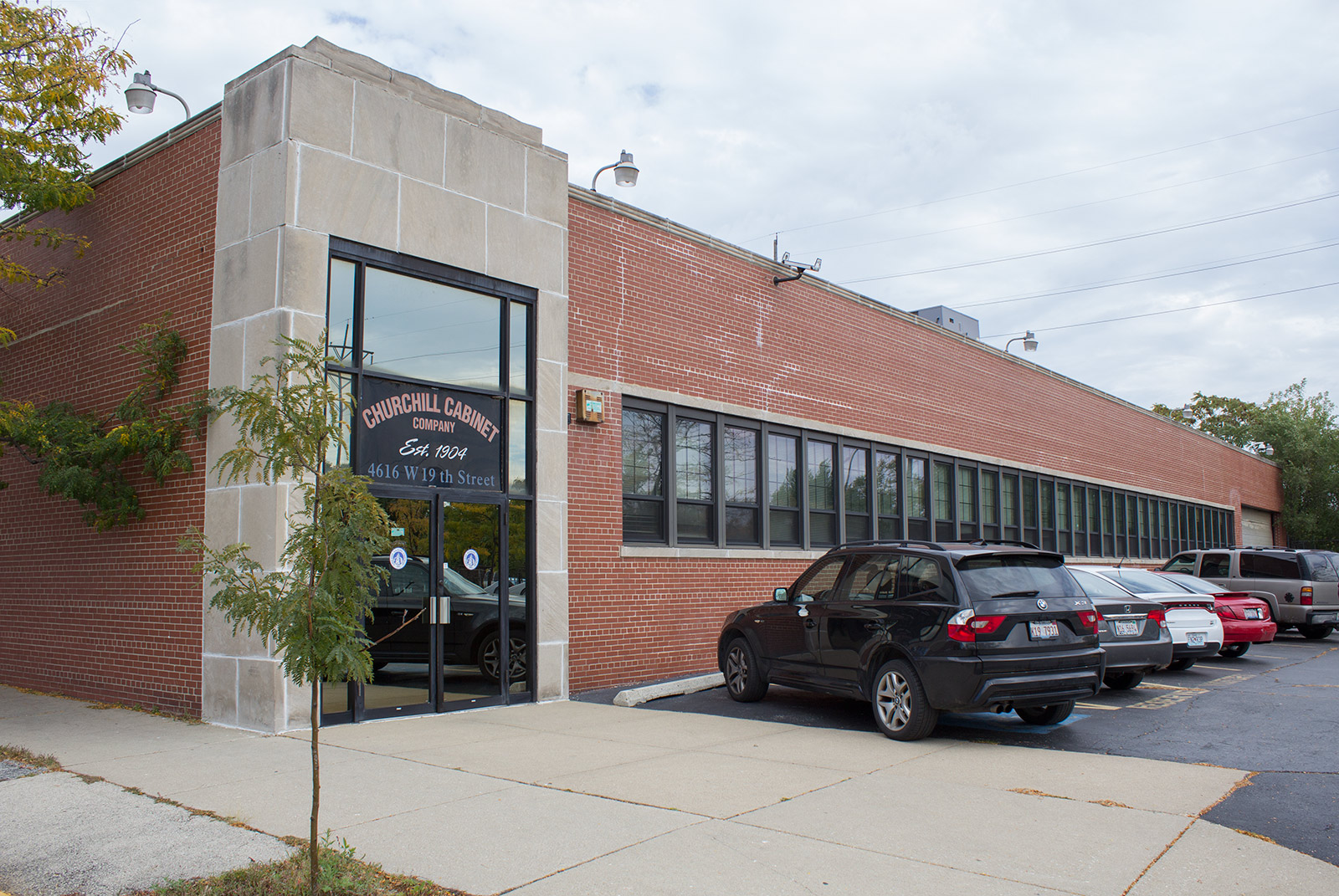 The Churchill Cabinet Company factory in Chicago Our guide was Doug Skor who is Vice President of Business Development at the company, and he began by relating how the Churchill Cabinet Company began, as the name suggests, by being a furniture maker. The business changed as cheaper, mass-produced furniture became the norm and the video game business took off, requiring the manufacturing of thousands of arcade cabinets for companies such as Namco and Midway. The video bubble burst, of course, but pinball has remained a steady business for the company, and they bought playfield maker Lenc-Smith from Williams in 1996. In fact the building we were visiting at 4616 W. 19th Street in Cicero was the former Lenc-Smith facility.  The Churchill Cabinet Company factory in Chicago Churchill not only makes pinball and video game cabinets and playfields, they also sell a range of complete games under the Chicago Gaming Company brand. This includes the remake of the Medieval Madness pinball and the Arcade Legends video multi-game console.  Home to the Chicago Gaming Company as well The company’s core business of building cabinets and playfields hasn’t changed greatly over the years, and upon entering the building it is apparent not much has changed in the reception area either. The wallpaper, carpet and sofa could all bear witness to the rollercoaster fortunes of the coin-op business since the ’60s. Walking into the factory we were immediately faced with numerous boxes of completed games awaiting shipment. Medieval Madness remakes made up the majority but there were Arcade Legends games as well, with everything – and this is a theme we shall return to throughout the factory – coated in a fine layer of wood dust.  Boxed completed games  Medieval Madness remakes 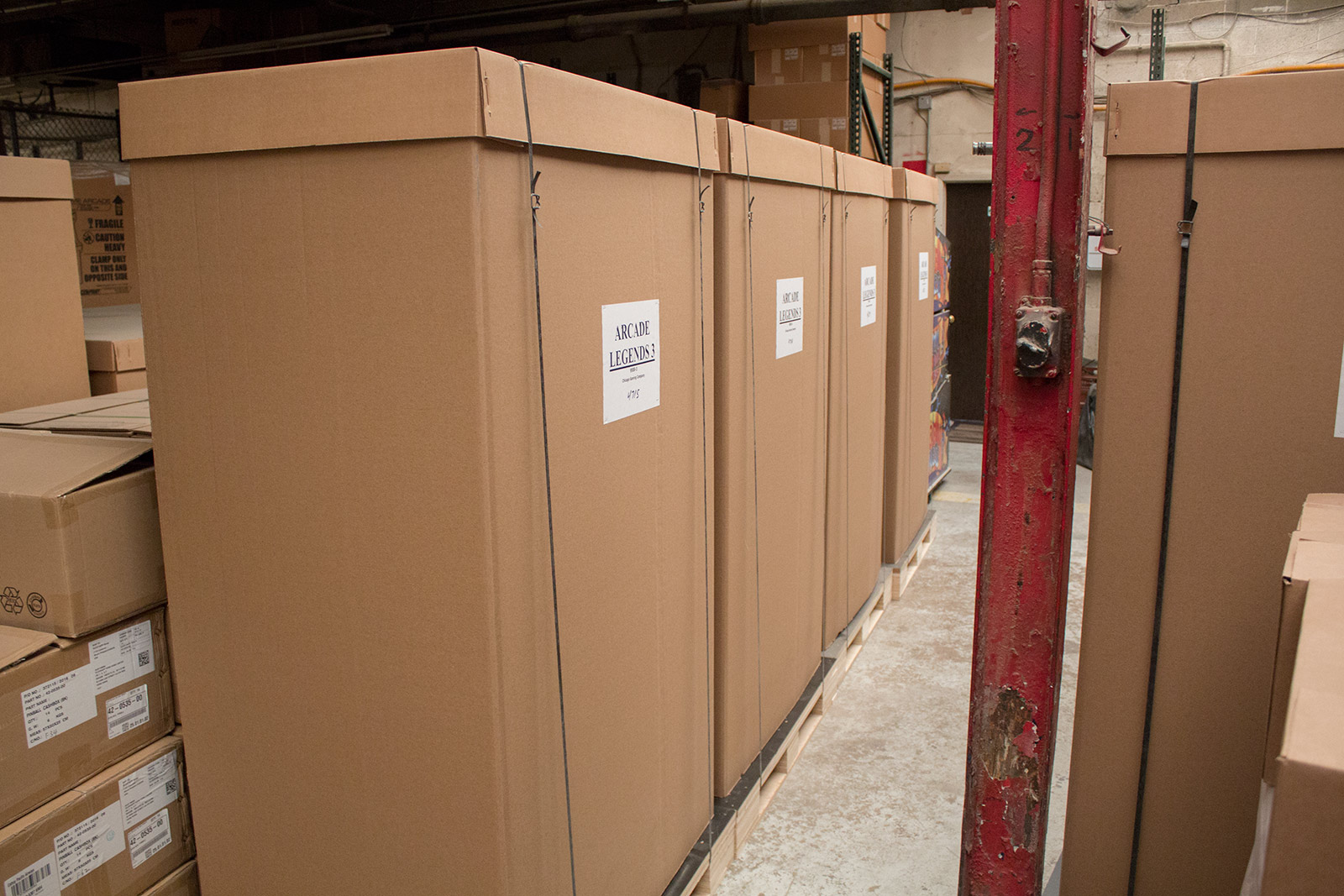 Arcade Legends video games Walk inside a little further and the view changes from complete games to assembled components and finally to the constituent parts.  Medieval Madness remake backboxes 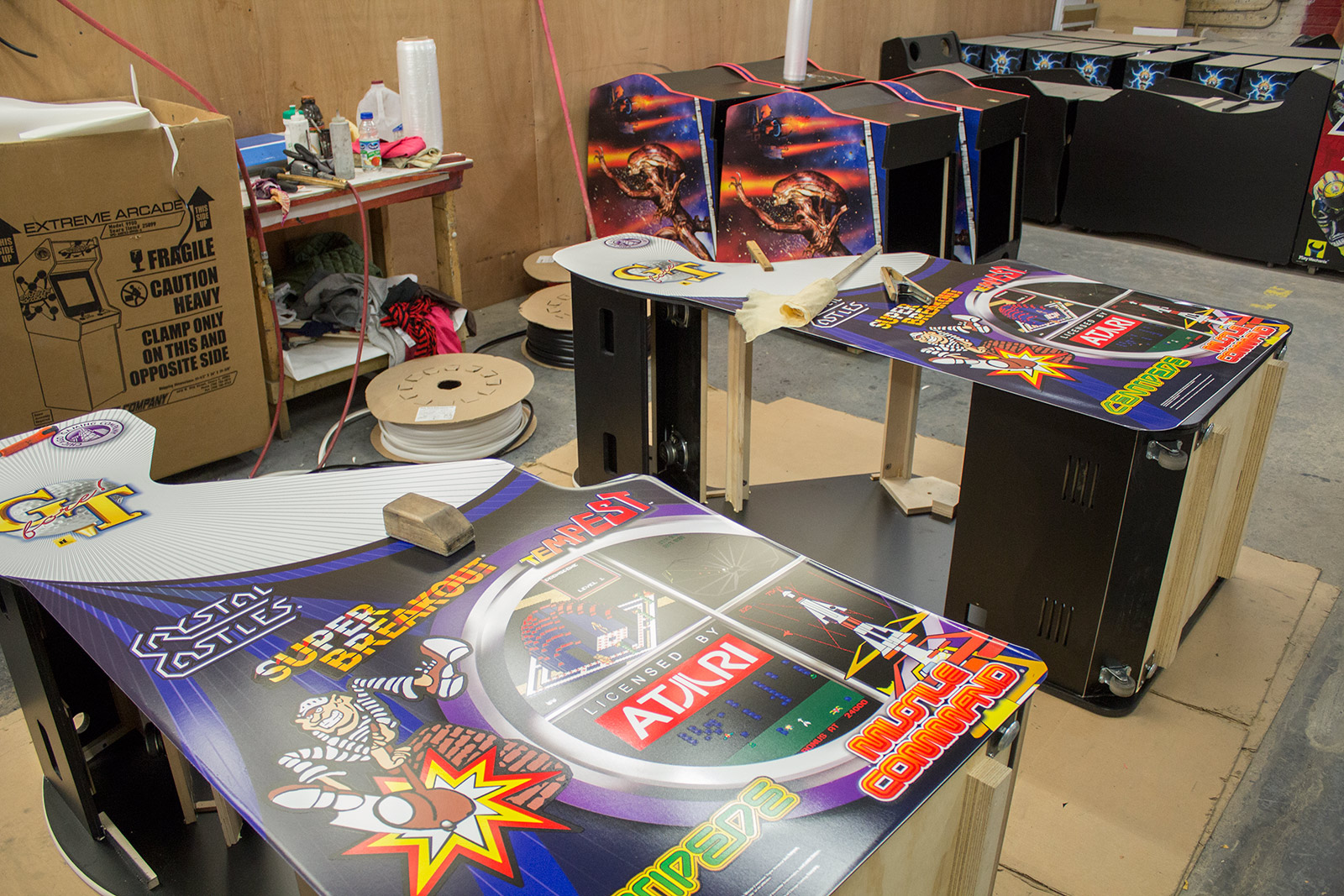 Decals being applied to video game cabinets 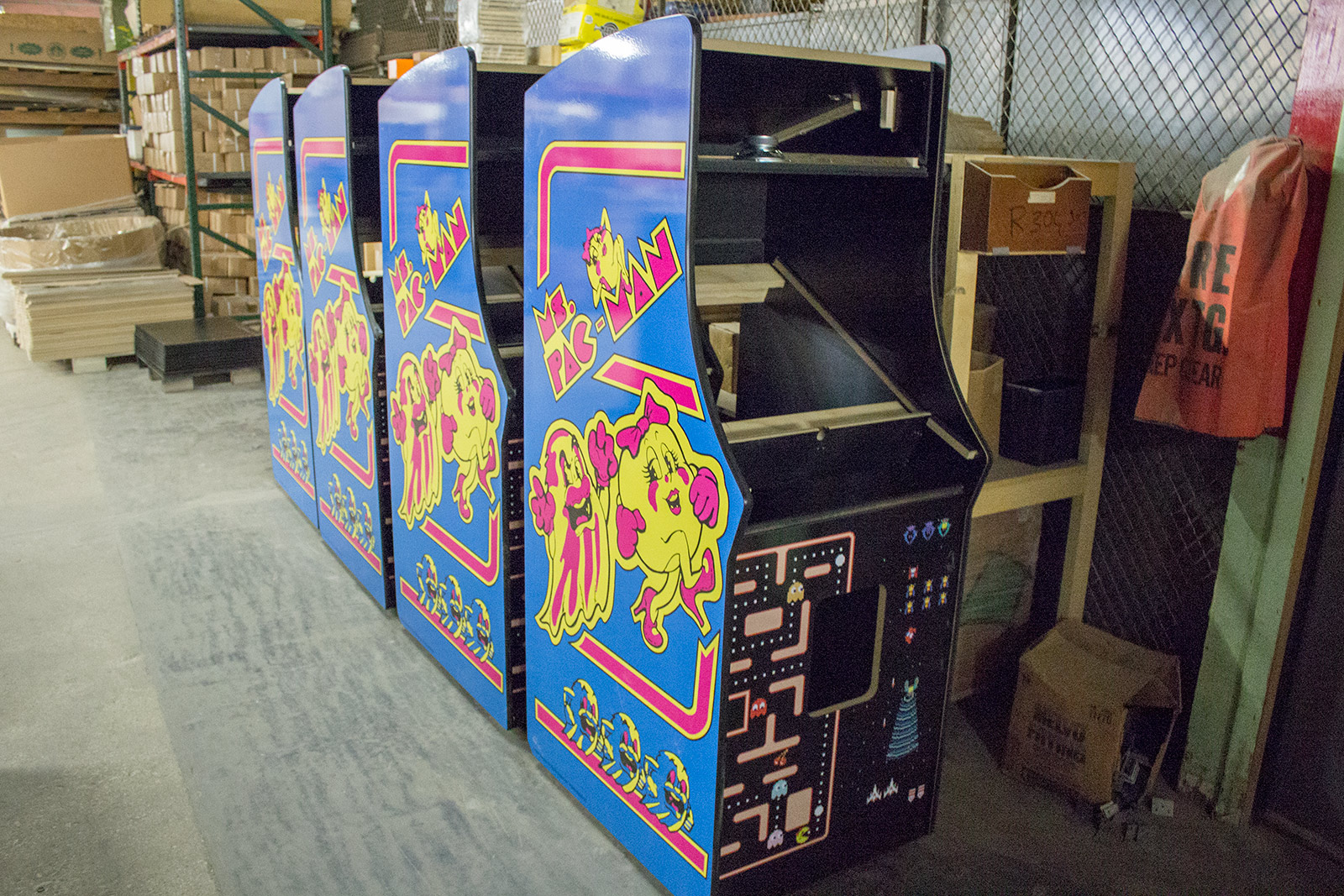 Ms. Pac-Man and Galaga combo cabinets Of course building the cabinets and backboxes for the Chicago Gaming machines are only a part of the company’s business. Making cabinets, backboxes or playfields for other game manufacturers such as Stern Pinball, Jersey Jack Pinball and Raw Thrills is the bulk of their work. 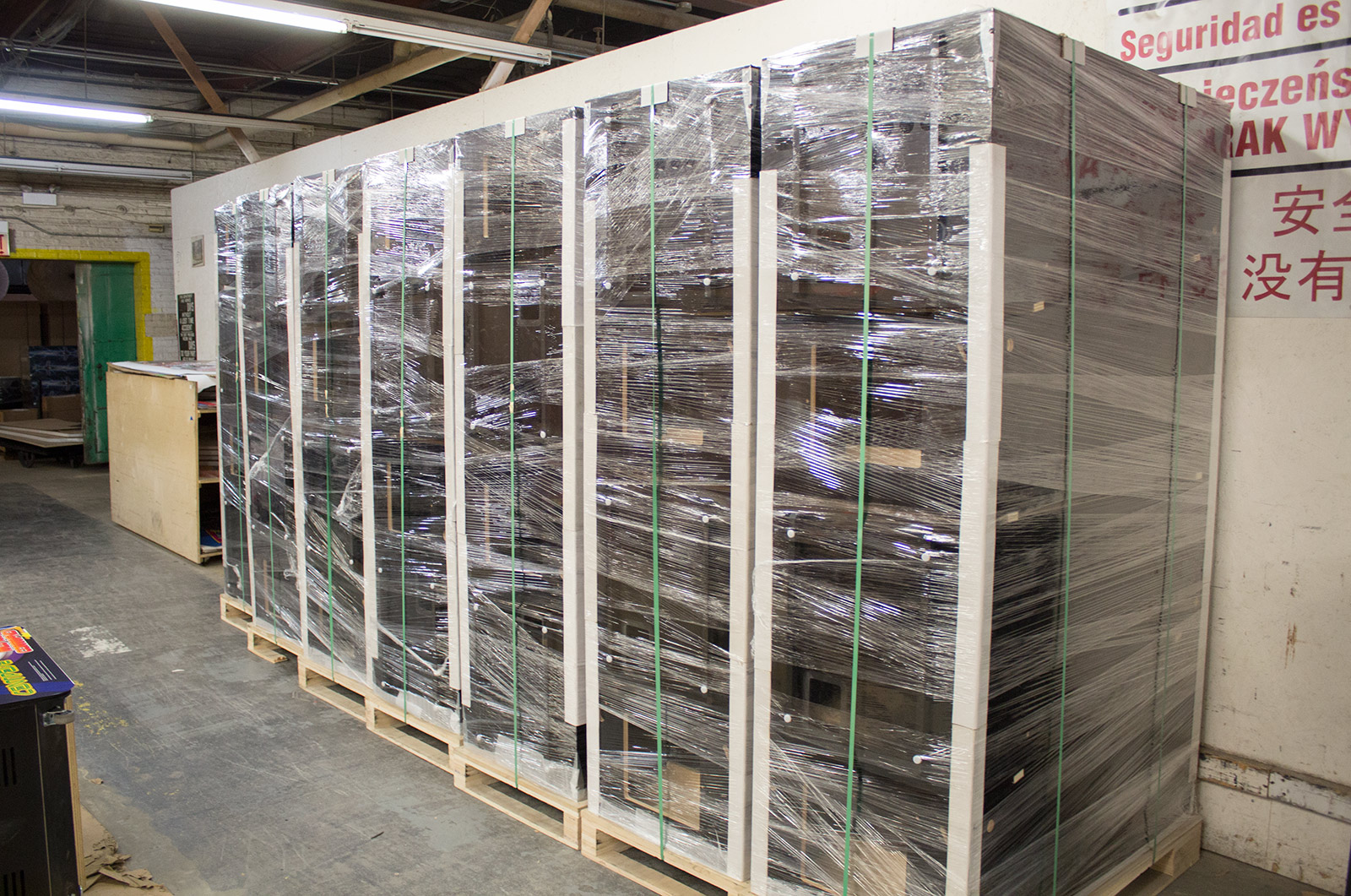 Stacks manufacturer As we walk further through the factory – it’s quite deep – we pass the playfield and cabinet panel routing areas.  A Metallica Pro playfield on the router  Stern now use code names for their games – James is Metallica One thing you quickly marvel at is the sheer quantity of plywood sheets around the factory – some plain, some cut and some routed.  Stacks and stacks of wood Previously the interior of pinball cabinets would have been sprayed black – usually quite roughly – but they now have a black laminate which is etched away by the routing machine to improve adhesion when other wooden parts need to be glued to the panel. The outer face is treated and spray-painted wood as printed decals adhere better to that than to a laminate. 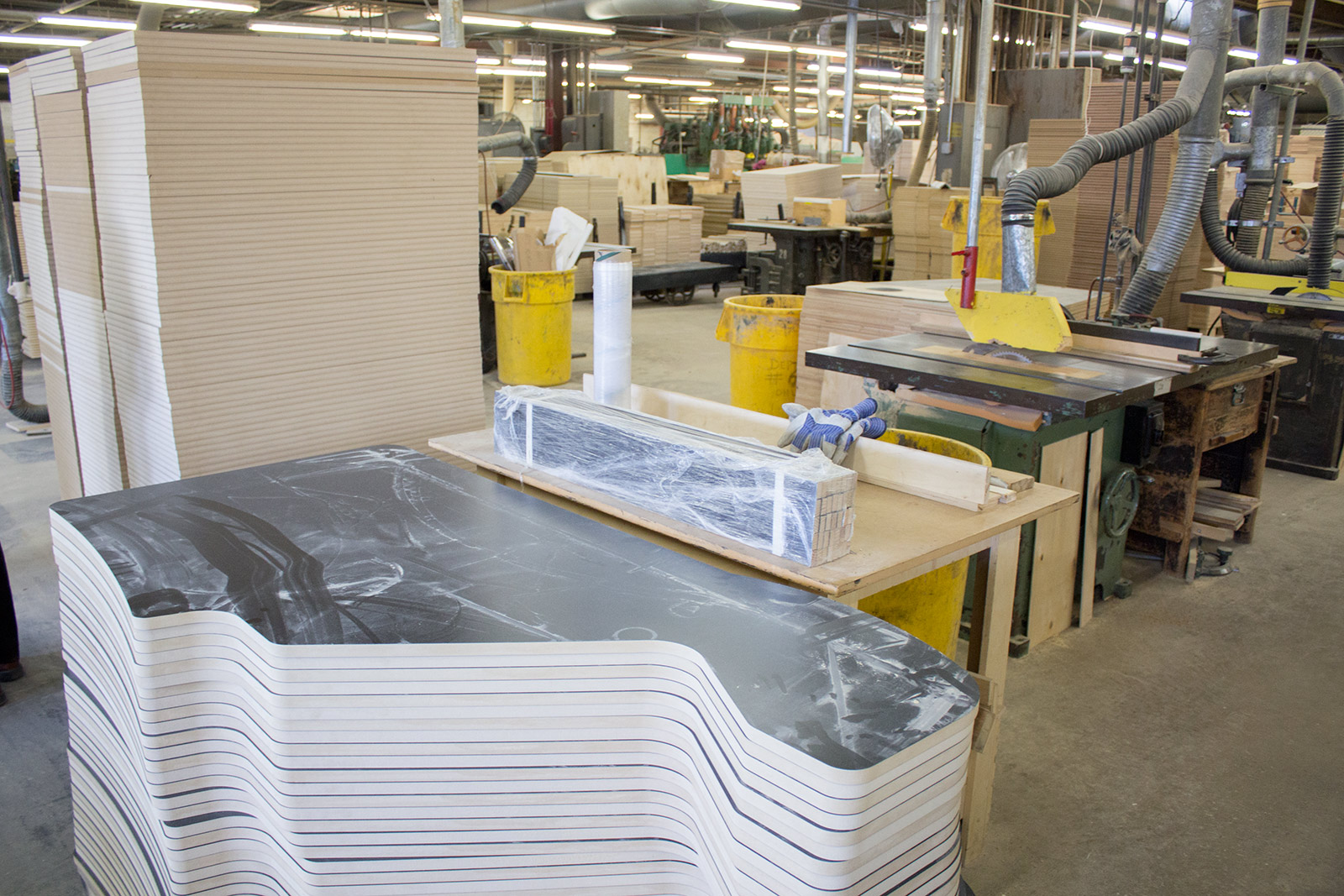 Stacks panels  Where the bottom panels are made  Pinball cabinet bottom panels  Just one stack of many Pinball cabinet side panels are first cut from a larger sheet and then routed to produce the interlocking grooves, the flipper button holes, the screw holes and etched where mounting blocks will be glued and screwed to the side.  Cutting the side panels  The side panels are routed on this machine  A finished side panel 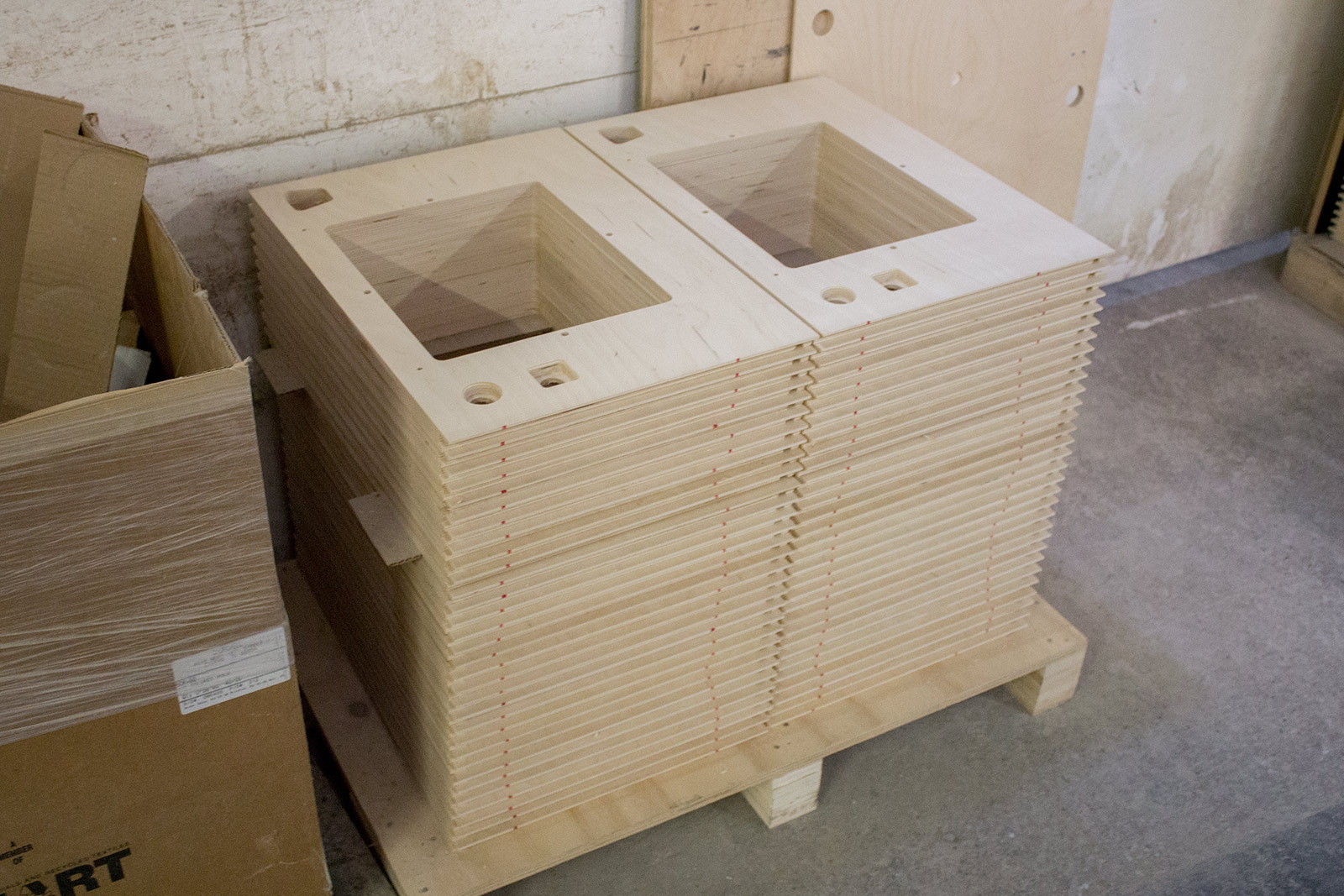 Front panels are produced in the same way  The it’s time to put them all together The actual method of building a cabinet looks a little ramshackle but it’s a tried-and-tested technique which has produced countless tens of thousands of pinball games. The front, back, bottom and side panels are glued and interlocked before going into a giant hydraulic cabinet press which applies pressure to form a complete and very solid base cabinet.  The cabinet press There are actually two cabinet presses here back-to-back, allowing two cabinets to be made at once. 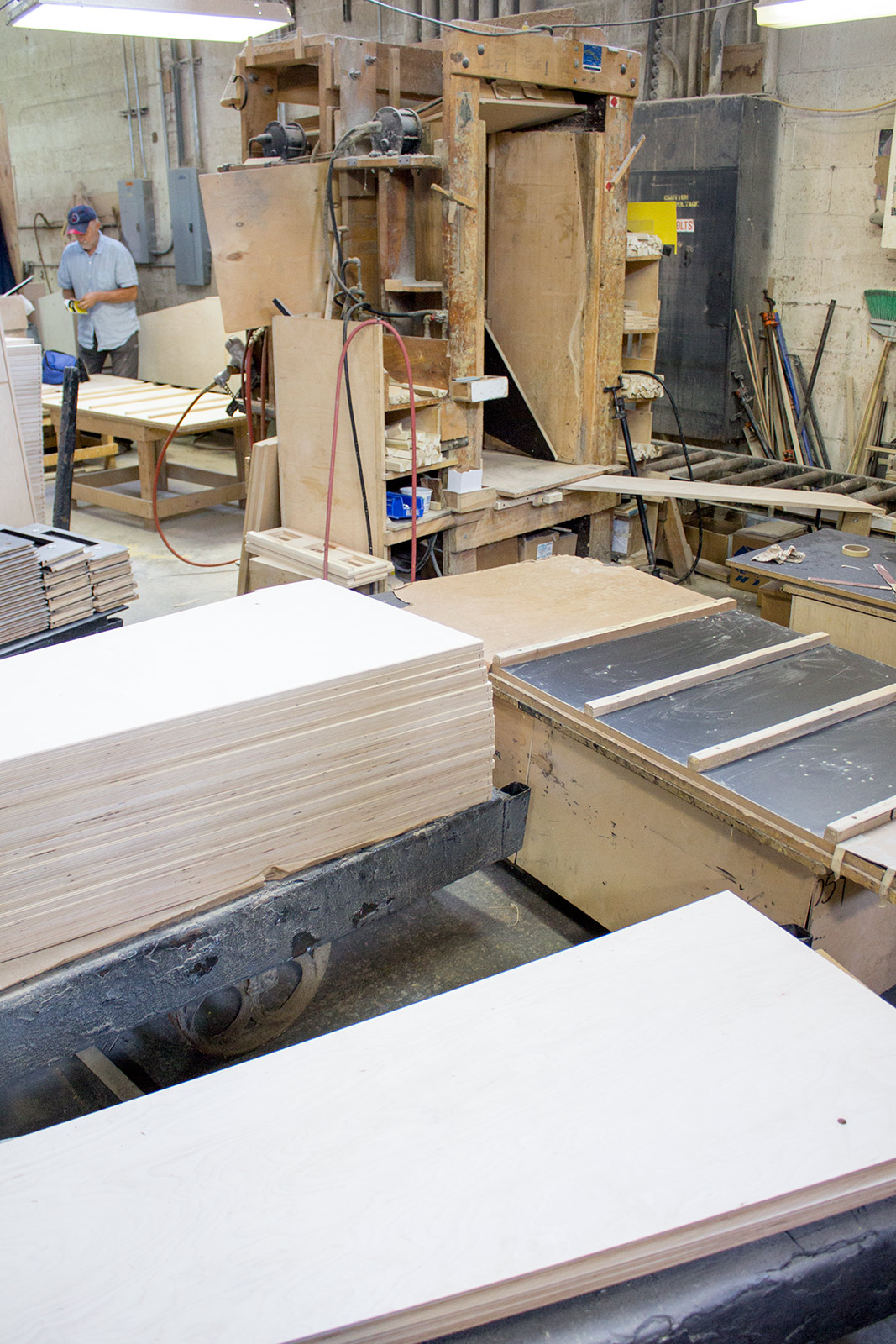 The cabinet forming area The playfields, meanwhile, continue on a separate line.  Routing the playfields Once they have been routed they are examined for any flaws in the wood or in the routing. This produces a surprising number of rejects, all of which are stored in the Churchill Cabinet Company factory, although Doug said they would one day get around to clearing them out.  Reject playfields  Reject Fortune  Playfields for Transformers and Rolling Stones If you are wondering where all this wood comes from, the factory stores large stocks of Russian Birch – a name given to the type of wood whether or not it comes from Russia.  Stocks of Russian Birch  Stocks of Russian Birch Those playfields which pass muster move on to the inserts room where every insert is hand glued and knocked into position. Boxes and boxes of inserts from Northern Plastics form the walls of the insert room. 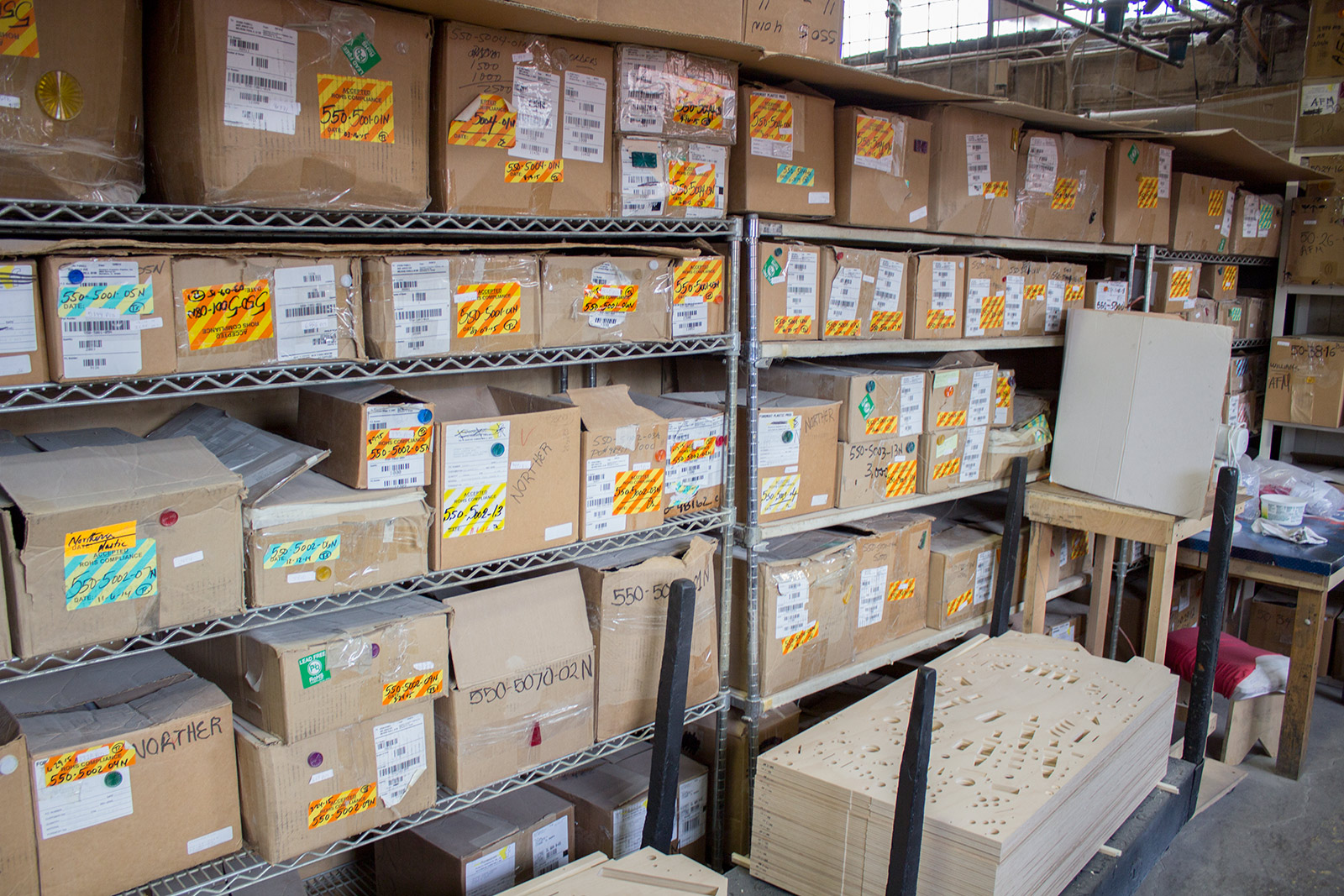 Boxes of inserts  Inserting the inserts into a Metallica playfield  Affixing the inserts needs glue – lots of glue  After and before  More insert-complete playfields  Doug with some insert-complete playfields If there are any imperfections, the playfield is sanded to level everything before it move on to have artwork screen printed on it.  Sanding down a playfield Once a playfield is checked and passed it moves on to the screen printing room where the individual inks are applied by hand, one-by-one. The artwork is traditionally printed using a CMYK process which has additional layers added to print white or other specific colours not adequately reproduced by CYMK inks. Each ink requires a separate screen to be made. A screen is a semi-porous sheet which allows the ink to pass through in varying amounts in specific areas. Churchill don’t make the screens themselves, so before a screen is used it is verified in the screens room. 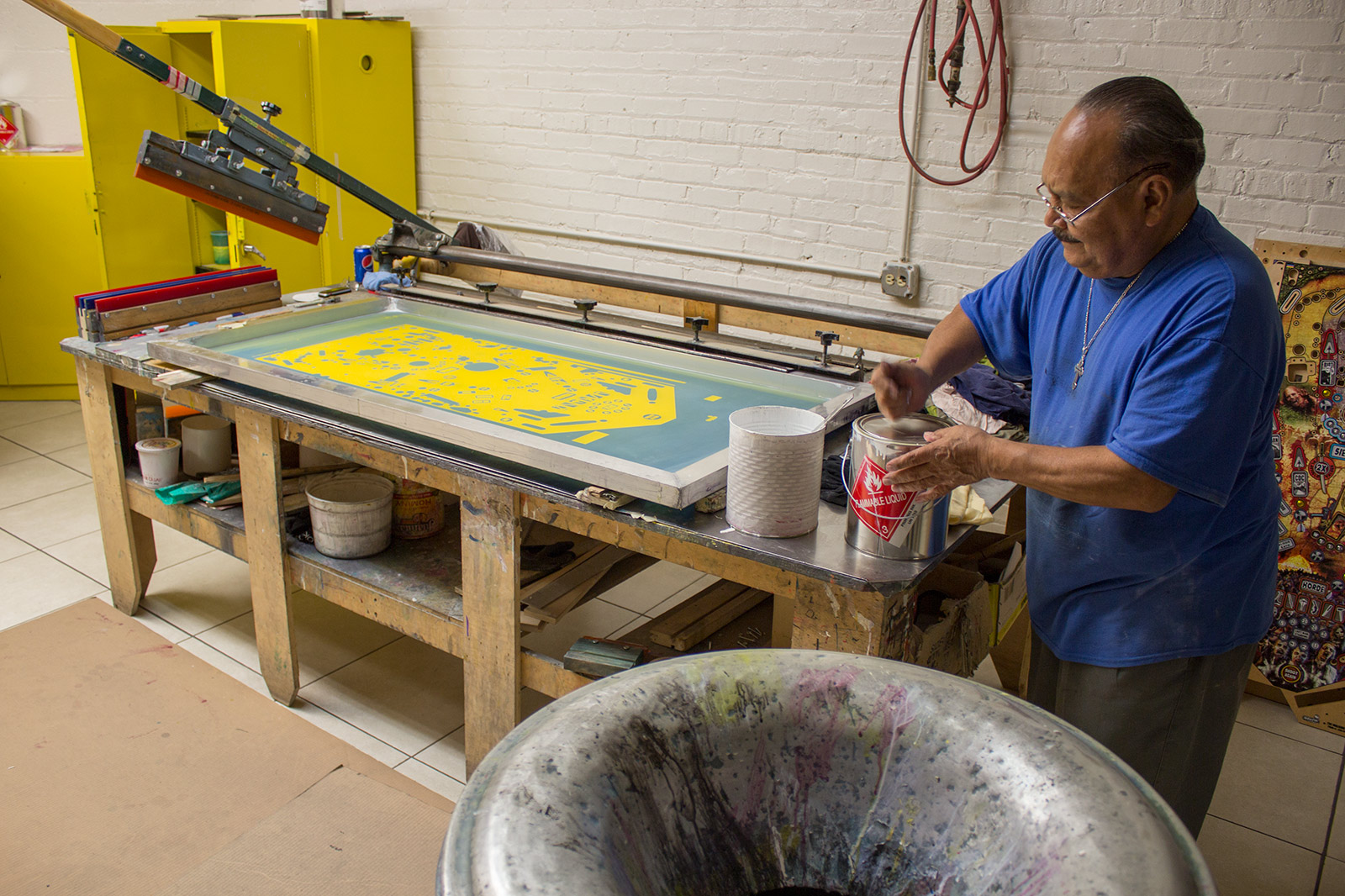 Checking the screens  The multiple screens for various games  The multiple screens for various games 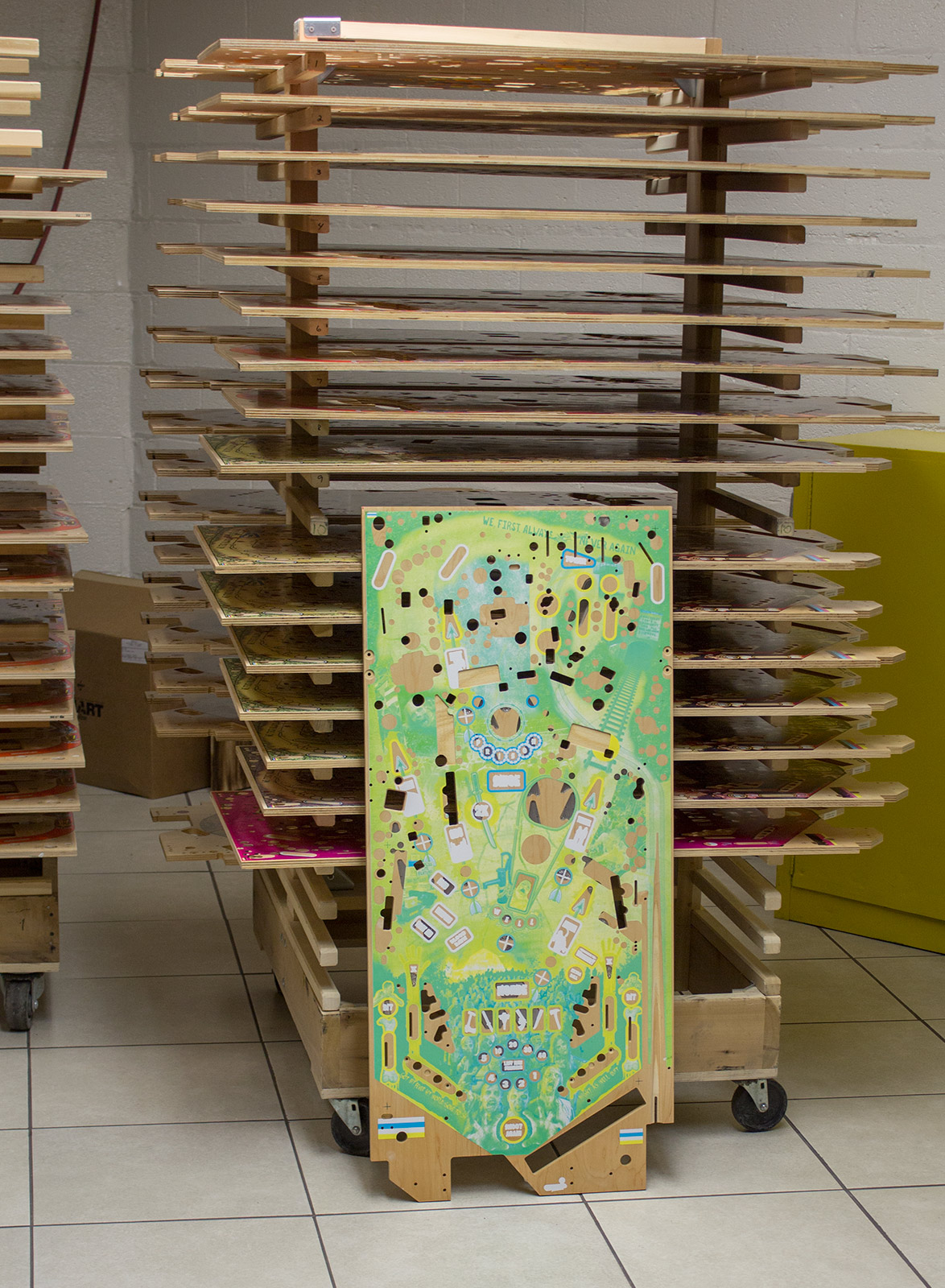 A The Walking Dead playfield without the magenta ink Once the screens are approved, they are used to print playfields.  A Ghostbusters cyan screen is primed with ink  A Ghostbusters playfield printed screen  The ink squeegee bar is slid down the playfield to spread the ink  The freshly inked playfield is removed to dry  Drying racks for playfields 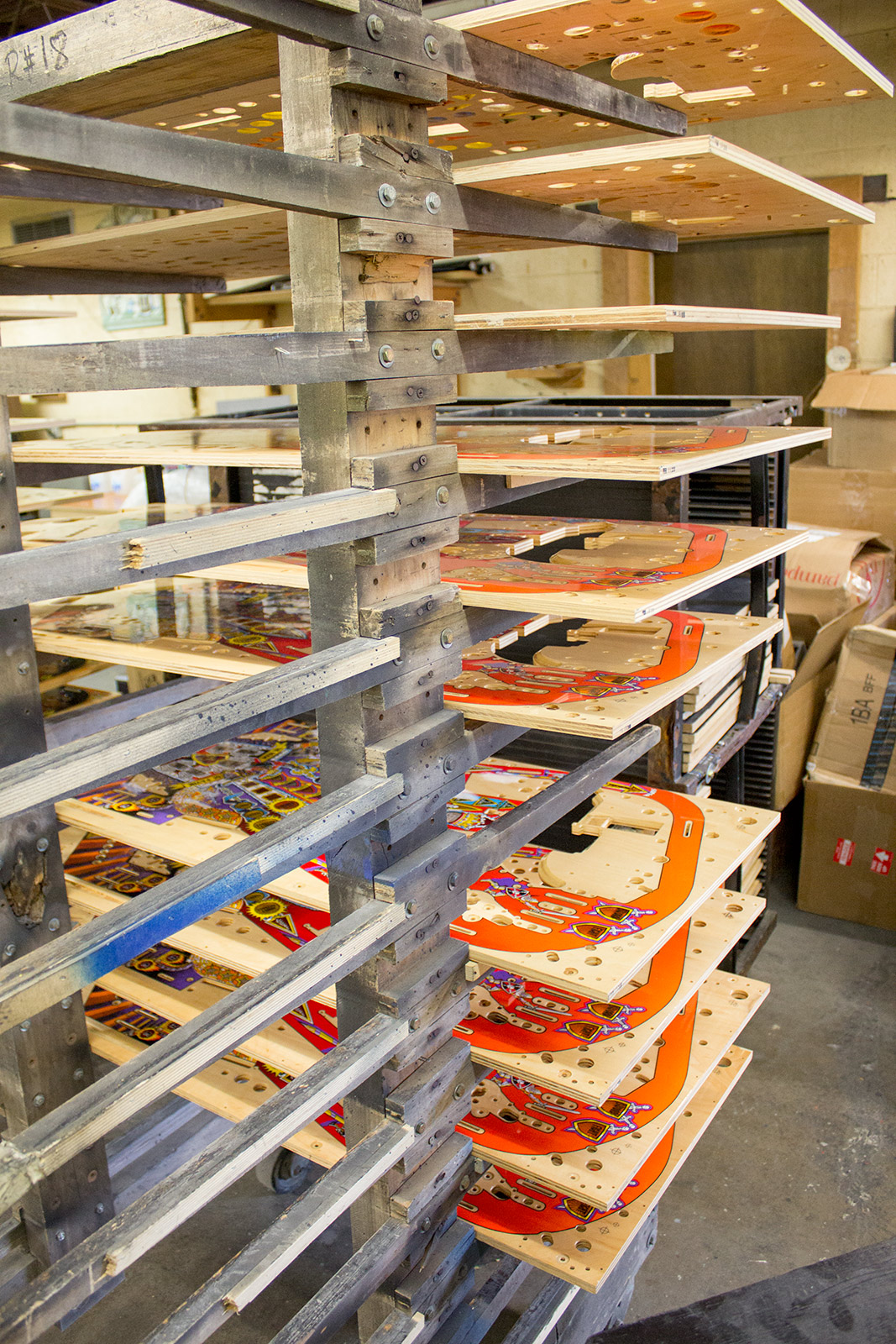 Medieval Madness playfields drying Once all the ink layers have been screen-printed and the inks have cured, the playfields head off to be clearcoated.  Ghostbusters playfields being clearcoated Due to the noxious fumes we weren’t allowed in the clearcoating area, but we could see the results which looked very impressive.  Clearcoated playfields drying in racks Once the playfield is checked an approved, it is labelled and put in a shipping rack for the journey to the pinball factory.  Finished playfields While we were visiting, some tests were taking place on different mixes of clearcoat. A Ghostbusters playfield had been cut in four (yes, we know) and different levels of clear were tried on each part. There’s no question that before the clear layer is added, the finish of the playfield is very dull and lifeless. The clearcoat brings it alive, making the colours far more saturated and vibrant as well as providing protection to the artwork.  A Ghostbusters playfield cut in four  The four parts are sprayed with clearcoat As we headed back to the front of the building and the end of our tour, we grabbed a few more pictures of cabinets being built at the factory.  More video cabinet sides with the ever-present wood dust 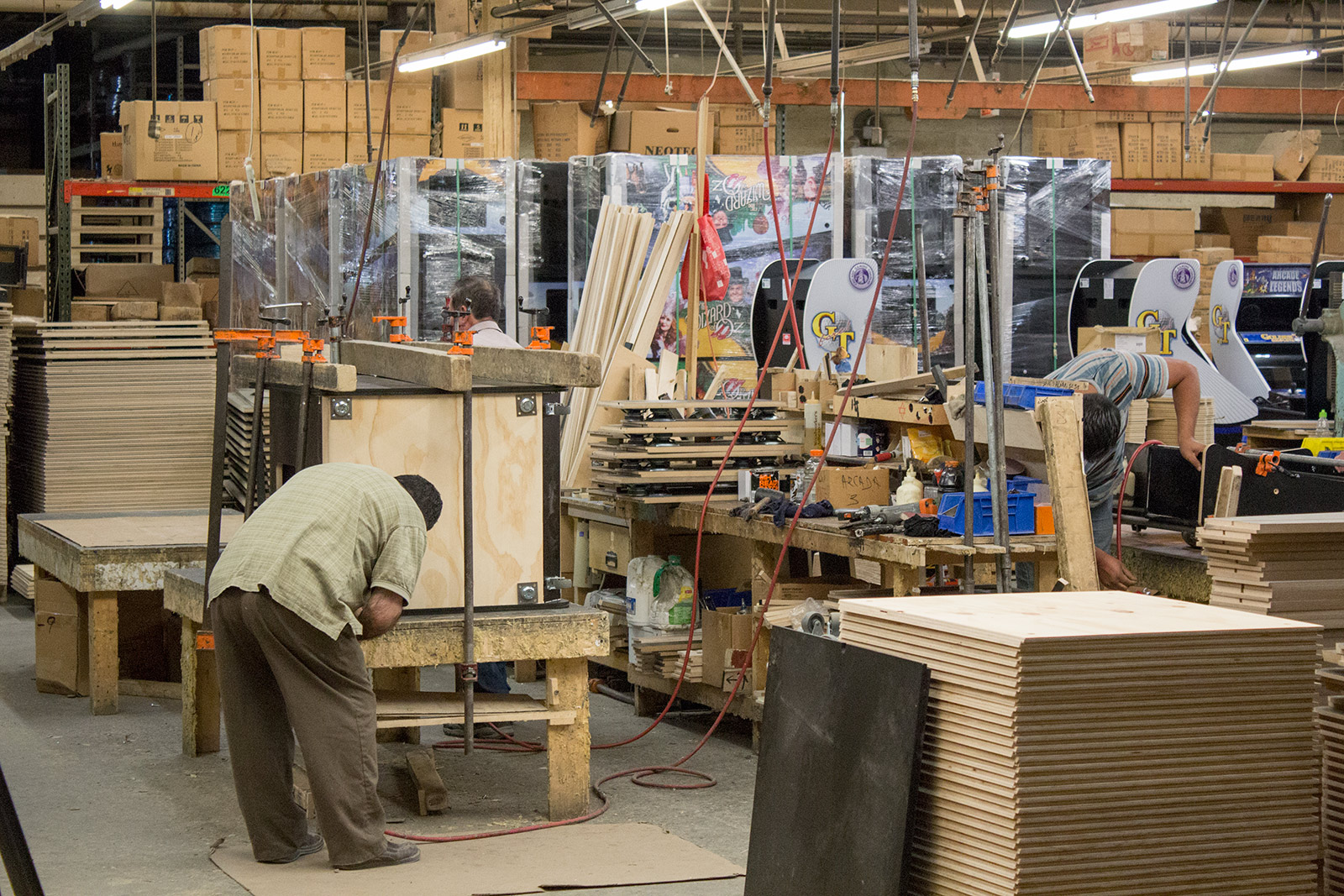 Building back 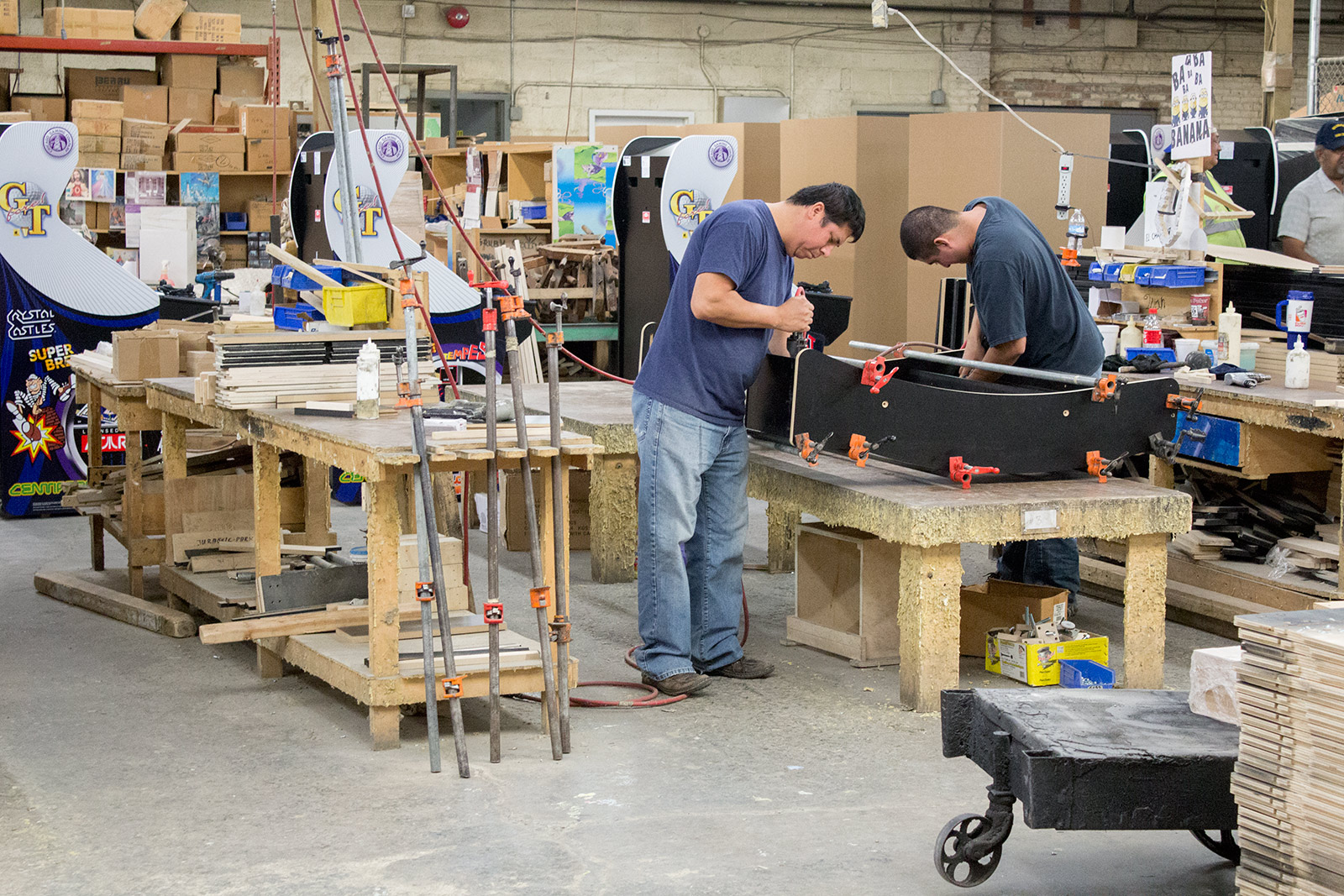 Building Arcade Legends video cabinets Finally, we were expecting Chicago Gaming Company to announce their second ‘remake’ title at Pinball Expo, but for various reasons that announcement didn’t take place. 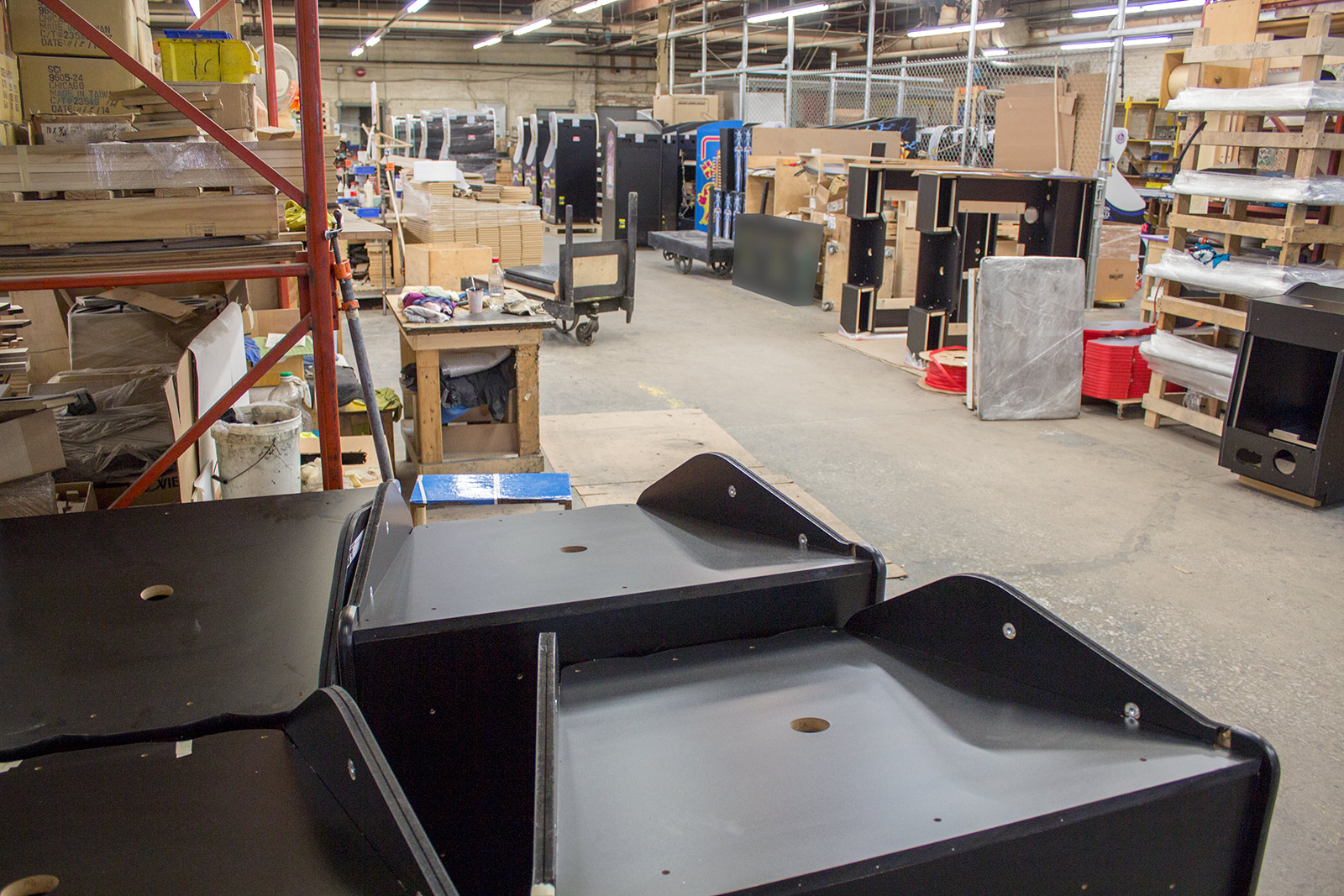 Once final look at the Churchill Cabinet Company factory floor Huge thanks to Doug for taking time out from his Pinball Expo preparations to show us around the factory and explain its inner workings. To an outsider it might all seem slightly chaotic, but the company has been building cabinets, backboxes and playfields for decades and know their stuff. As we have seen with other companies, not having that kind of experience can lead to problems with the quality of the product. Meanwhile Churchill Cabinet / Chicago Gaming seem very relaxed and confident about the future. After all, while new pinball entrants bring technological advances and novel game designs to the pinball-buying masses, every game needs a cabinet, a backbox and a playfield.